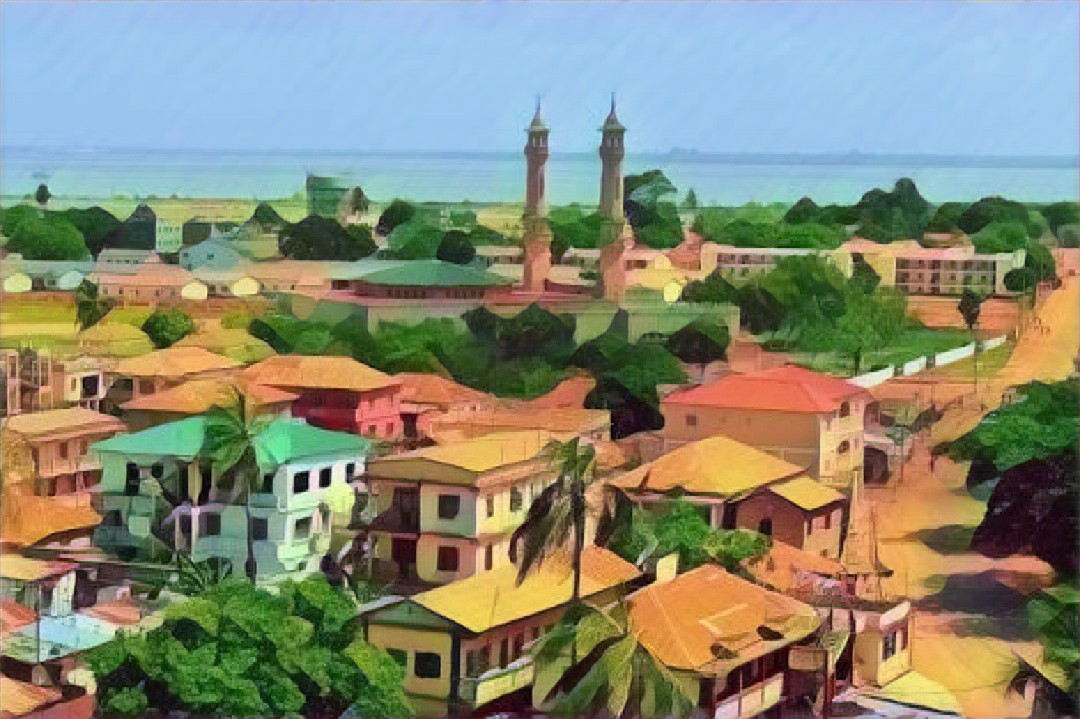
On 8th February, 2018, The Gambia formally rejoined the Commonwealth of Nations, an association composed mostly of former territories of the British Empire. This event marks the current political reorientation taking place in the smallest nation in Mainland Africa under President Adama Barrow.
President Adama Barrow vowed as part of his campaign promise to return The Gambia to the Commonwealth if he is elected President and true to form that promise is today a fulfilled one. —HMFA
— MOFA The Gambia (@MOFAGambia) February 8, 2018
The Gambia’s former President, Yahya Jammeh, unilaterally had withdrawn the country from the organisation in 2013 after 48 years of membership. Branding the Commonwealth as a vehicle of imperialism that aimed to control the internal affairs of The Gambia and back his political opponents, Jammeh declared in 2013 that the country “will never be a member of any neo-colonial institution and will never be a party to any institution that represents an extension of colonialism.”
Truth behind Jammeh’s pullouts
The accusation of neocolonialism, however, was a thin subtext for Jammeh’s true intent. As a voluntary union of nations, Commonwealth members have committed to upholding democratic principles, including liberty, equality and participation. Critics of the withdrawal from the Commonwealth cite Jammeh’s gross human rights violations – including extrajudicial killing, political imprisonment and repression of the media – as the true intent for the withdrawal.
Jammeh’s flouting of international law also precipitated his decision to withdraw The Gambia from the International Criminal Court (ICC) in 2016. The decision to leave the ICC was issued on 25 October 2016.
Jammeh’s then-information Minister, Sheriff Bojang excoriated the ICC for “failing to indict former British Prime Minister over the Iraqi war,”[1] and called the court “International Caucasian Court for the persecution and humiliation of people of color especially Africans.”
Indeed, many African leaders can attest to the ICC’s crusade against impunity on the continent. The Court issued an arrest warrant for former Libyan leader Muammar Gaddafi, Sudanese President Omar Al-Bashir, and Liberia’s Charles Taylor (who was tried at ICC and is currently serving a jail term in the United Kingdom), as well as for Laurent Gbagbo of Cote d’Ivoire who is currently under trial.
Jammeh’s then-information Minister, Sheriff Bojang excoriated the ICC for “failing to indict former British Prime Minister over the Iraqi war,”[1] and called the court “International Caucasian Court for the persecution and humiliation of people of color especially Africans.”
Jammeh’s decision to withdraw The Gambia from the Commonwealth of Nations and ICC was intended to thwart organisations from pushing political reform within the country. Moreover, these withdrawals were a clear attempt by Jammeh to exculpate himself from prosecution against a 22-year reign that was marked by torture, extra-judicial killings and arbitrary detentions.
During his presidential campaign in 2016, Adama Barrow promised to rejoin the Gambia both into the Commonwealth of Nations and the International Criminal Court. This promise has been fulfilled. Upon assuming office in 2017, the Barrow government rescinded the withdrawal from ICC with immediate effect.
Prosecutor #Bensouda thanks H.E. President A. Barrow & Ministers of Foreign Affairs & #Justice of The #Gambia 4 their support of #ICC #UNGA pic.twitter.com/ExCm1VmHbI
— Int'l Criminal Court (@IntlCrimCourt) September 21, 2017
Looking west
Apart from the end of Jammeh’s tyrannical rule, what else accounts for the Gambia’s pivot back towards the West?
Welcomed warmly in The #Gambia. President Barrow & I held talks on helping his country inc rejoining the #Commonwealth after recent election pic.twitter.com/FqtC4xXt0P
— Boris Johnson (@BorisJohnson) February 14, 2017
Barrow’s campaign also included overtures of revitalising the coastal nation’s economy, in line with Gambia’s changing strategic and economic interests. The Gambia considers EU its most important trading partner representing 86% of its total import value.
The timeliness of Gambia’s rejoining the Commonwealth is crucial to Britain as that country hedges is strategic partnership abroad for a post-Brexit world. The Gambia’s strategic location as the gateway to the Atlantic Ocean could serve the interests of both the British and provide a fillip to the Gambia’s export competitiveness.
Furthermore, the launch of The Gambia National Development Plan (2018-2021), a comprehensive blueprint for reforms and development approved by the government in January, 2018 has attracted donors and foreign direct investment to the country, as its economy and society reopens to the world. In an international conference held in Brussels for The Gambia in April 2018, the international community pledged a total of 1.45 billion Euros to the Gambia for the 3-year plan.
The timeliness of Gambia’s rejoining the Commonwealth is crucial to Britain as that country hedges is strategic partnership abroad for a post-Brexit world. The Gambia’s strategic location as the gateway to the Atlantic Ocean could serve the interests of both the British and provide a fillip to the Gambia’s export competitiveness.
Jammeh transformed The Gambia’s relations with the West for the worse, and Barrow has a strategic imperative to break away from his predecessor’s dictatorial style. Jammeh had threatened to “slit the throat of gay people”[2], expelled the European Union Ambassador, and branded the British Deputy Head of Mission as persona non grata. The country was also kicked out of Africa Growth and Opportunity Act (AGOA) by the United States, an initiative that offers tangible incentives for African countries to continue their efforts to open and build their economies. There was no official reason for The Gambia’s removal from AGOA, but many observers trace it to Jammeh’s gross human rights violation.
The Gambia’s reunion with the Commonwealth and ICC is meant to restore good governance, free and fair elections, respect for rule of law, independence of the judiciary, and the protection of human rights. These are the fundamental values of the Commonwealth and the International Criminal Court. Today, once again, these are the fundamental values of The Gambia too.
Pa Sako Darboe works at the Middle East Affairs Division, Ministry of Foreign Affairs, International Cooperation and Gambians Abroad, The Government of The Gambia.
Eli Birgé is a research analyst based in Washington DC, US.