


As India battles the COVID-19 pandemic, the Bharatiya Janata Party (BJP)-led government has launched a blitzkrieg against young activists and journalists critical of its policies and politics. A total of five individuals – Meeran Haidar and Safoora Zargar of Jamia Milia Islamia University, Shifa-Ur-Rehman of Jamia Milia Islamia Alumni Association, Danish of Bhajanpura, and photojournalist Masrat Zahra of Kashmir – have been booked under the draconian Unlawful Activities Prevention Act (UAPA).
Haidar and Zargar (who is in her second trimester of pregnancy) have been booked by the Delhi Police for allegedly instigating communal violence in Northeast Delhi in February. Twenty six-year old Zahra has been charged by the police’s Cyber Cell for a 19-month old Facebook photo post that shows a protestor holding up a poster of slain Kashmiri militant, Burhan Wani, with the words “Shahid” (martyr) written in Urdu.
Additionally, Jawaharlal Nehru University (JNU) student leader, Umar Khalid, has also been named in an FIR in connection with the Northeast Delhi violence. It remains unclear whether he has been charged under UAPA like the others.
Despite widespread criticism of harsh punitive action taken against the young activists and journalists during a pandemic, the Delhi Police has confidently asserted that they have conducted the investigation “sincerely and impartially”. This, however, takes us back to the critical lapses in the Delhi Police’s conduct during the Northeast Delhi violence, and the many structural problems conspicuous in its functioning.
In this context, understanding the role and failures of the Delhi Police in February’s communal violence is important, as these will have serious consequences on the health of our constitutional democracy. If the facts of the case and the nature of actions undertaken by the police remain obscure, recuperation would be very difficult, even after the virus goes away.
What happened in Northeast Delhi?
On 12 December, the President of India gave his assent to the Citizenship Amendment Act (CAA), which eases the naturalisation process for immigrants belonging to six religious denominations – Hindu, Sikh, Jain, Parsi, Buddhist and Christians – who came to India from Pakistan, Bangladesh and Afghanistan on or before 31 December 2014.
The law has been severely criticised for being discriminatory, because it excludes Muslim immigrants. The enactment of this controversial law led to a lot of resentment and nationwide. Several impromptu street demonstrations erupted across the country, including in Delhi’s Shaheen Bagh and Jamia Nagar.

On the morning of 22 February, thousands of protestors began a sit-in protest near the Jaffrabad metro station in Northeast Delhi. Soon after, pro-CAA demonstrators too began thronging the streets, close to the protest site. These developments coincided with the BJP’s loss in the Delhi state assembly elections and the high-profile visit of US President Donald Trump to India.
On 23 February, BJP leader, Kapil Mishra, went to the sight of the demonstration and delivered an inflammatory speech in which he threatened to take the law in his hands and clear out the protest site. This speech is widely being cited as being a major inciting factor that led to the riots. Yet, Mishra denies the allegations.
Right after his speech, at about 4 PM, gruesome violence broke out between anti-CAA and pro-CAA demonstrators. Mobs pelted stones at each other, lit up shops, set fire to vehicles, opened fired and launched physical attacks. The violence continued to intensify over the next three days, as rampaging mobs attacked houses, murdered innocent bystanders, burnt down houses and assaulted security personnel and journalists. There were also multiple reports of mosques being vandalised and burnt down.
For at least 72 hours, Northeast Delhi witnessed almost everything that is incongruous to “rule of law”.

Illegal omissions by Delhi Police
What happened in Northeast Delhi is called “rioting” in legal parlance, and it is a species of unlawful assembly. Rioting is defined in Section 146 of the Indian Penal Code (IPC). As per Section 129 of the Criminal Procedure Code (CrPC), the police have the power to disperse an unlawful assembly by using civil force. Further, Section 131 of CrPC empowers the police to do the same by using armed force.
The Delhi Police claimed that they did not act on time because there was lack of coordination and a delay in receiving orders from the higher officials. But this excuse is fallacious, because as per the law, the police have sufficient discretion to deal with such exigencies on their own. The case laws regarding the same are fairly clear.
In Karam Singh V. Hardayal Singh, the Supreme Court laid down three conditions that are to be met before powers under Section 129 or 131 of CrPC are exercised:
First, there needs to be an unlawful assembly, which has an object to commit violence.
Second, there needs to be an order of dispersal.
Third, the unlawful assembly should refuse to disperse even after the order is given.
When all the aforementioned conditions are met, as per Section 129 of the CrPC, an executive magistrate and/or officer-in-charge of the police station and/or any officer above the rank of a sub-inspector is empowered to exercise civil and/or armed force to handle an exigent situation.
Further, in Commissioner of Police. V. Manoj Sharma, the court opined that whenever a law confers a duty on an official, it simultaneously confers a reasonable discretion to dispose that duty off. Although, there is no golden scale to ascertain the quantum of force to be employed in order to control any riot, the court warned that the force being used ought to be reasonable. This indicates that the police did have reasonable discretion to prevent the rioting, but their intentional inaction exacerbated the situation. This effectively counts illegal omission.
What more, even before the actual violence began, there was sufficient evidence to suggest direct incitement to violence. BJP leaders Kapil Mishra, Anurag Thakur (who is also a union minister) and Parvesh Verma gave inflammatory speeches, not-so-subtly suggesting that the anti-CAA protestors deserved to be killed because they were “anti-national” and could rape innocent women. The videos of these provocative speeches were circulated widely over WhatsApp and social media, flaring communal passions. Yet, the police exhibited laxity in lodging FIRs against them, as also observed by the Delhi High Court.
Legally speaking, the contents of these speeches were such that offences under Section 153 of the IPC that deals with the offence of inciting violence and disturbing public peace and Section 505 that deals with the offence of provoking people to commit offences against the state, could be clearly made out. As per the schedules of the IPC, both these offences are cognisable in nature.
Further, Section 154 of the CrPC mandates the police to lodge an FIR as soon as the details of a cognisable offence is brought to their notice. Thus, the police did not have any discretion regarding registration of the FIR, because the statute is clear about the necessity to do so. Despite this, the failure to register FIRs against Mishra, Thakur and Verma makes the police’s action ultra-vires, and amounts to an illegal omission.
Unjust actions
Several ground reports in mainstream and social media indicated that the Delhi Police turned hostile towards the Muslim community. They reportedly encouraged the pro-CAA demonstrators to commit violence under the protection of state agencies. At the same time, the Muslim community was directly targeted and subjected to violence by the police.
These actions were unconstitutional because the only possible defence for the government can be the doctrine of sovereign immunity, as per which the sovereign is immune from penalties for everything they do. But this defence would not help in this case because it is not applicable in the cases of violation of fundamental rights. Here, the actions of the police struck brutal blows on Article 21 (right to life) and Article 22 (right to not be arbitrarily detained) of the Indian Constitution, as many were deprived of their lives as a result of police inaction and were illegally detained and tortured by the police.
Further, these actions were illegal because various offences under IPC – murder, culpable homicide, grievous hurt and hurt – can be made out on the face of it. Many lost their lives and many were brutally injured due to the scuffle between the two communities, while the police either stood silently or encouraged the pro-CAA protesters to commit violence.
Although the law provides for a defence under Section 197 of CrPC, which provides immunity to the police officials for doing something that is conventionally considered to be a criminal offence when done in good faith while disposing off a legally conferred duty, as per the ruling in P.P. Unnikrishnan v. Puttiyottil Alikutty, this defence can only be invoked if there is a reasonable nexus between the police action and the legal discharge of the duty.
In the given case, the police’s action of protecting the pro-CAA protestors and being unresponsive to the calls for help that came from the anti-CAA protestors, is a blatant violation of the law and the Constitution. Therefore, their actions did not have any nexus with any legal duty of the police, as they are vested with the responsibility of protecting individual rights instead of taking them away illegally.
The need for better policing
There can be three possible reasons for police’s misconduct during the violence.
First, as per a 2016 Human Rights Watch report, many a times, the police lack resources, training and oversight with regards to the law and procedures. This highlights the need to professionalise the police force and train them on legal technicalities and procedures with more caution and commitment so that they do not falter in disposing off their duties during emergencies. Even one dereliction can cost many lives.
Second, the police inaction and hostility towards certain communities during the Northeast Delhi violence also resulted from inherent biases of the police personnel. In a survey conducted in 2019, wherein nearly 12,000 police personnel were interviewed, nearly 50% of the interviewees said that the Muslim community was more prone to committing crimes. Further, one out of three also felt that mob lynching in the cases of cow slaughter was natural.
This problem also finds its roots in the way police in India are trained. We have a few state police universities but we lack a national university. This points towards the need to establish uniform training standards for the police across the country. The police personnel in the state universities are also not trained in the areas of police administration, victimology, criminal jurisprudence and police administration. This is why police forces lack critical competencies in ethical decision making, democratic ideals and constitutionalism.
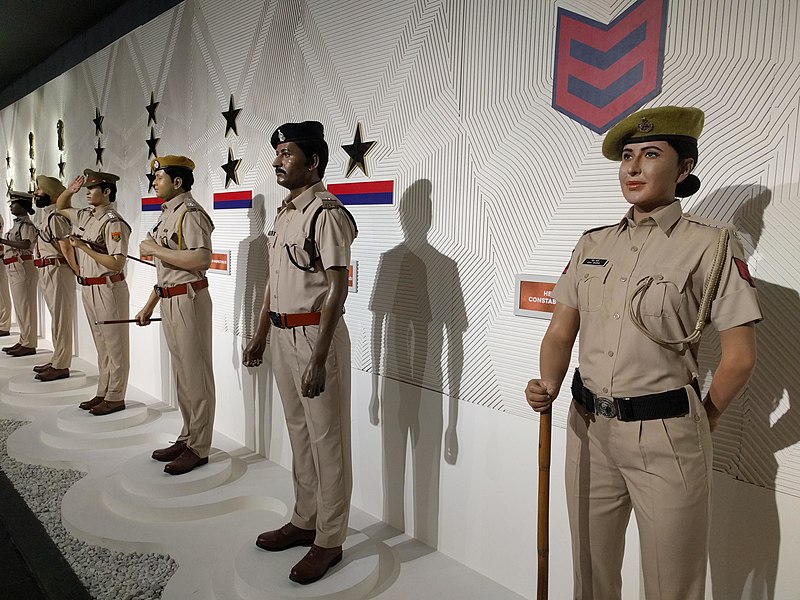
There is a need to make the police training mechanism more holistic in terms of the subject matters covered, so that the police can be equipped with the apt emotional quotient and sensitivity. This can go a long way in removing their inherent biases. Additionally, there is a need to conduct effective sensitisation training on subjects of gender, caste religion and so on. Such sensitisations rarely happen and are not taken seriously. There is a need to conduct these sessions with full commitment and consistency.
Lastly, there is need to have regular crowd control training sessions for the police. As per the current statistics, more than half of the police personnel received training in crowd control only when they were recruited, and not anytime in the future during active service. The fact that only 6.4% of police personnel have received any sort of training, in the past five years is something that should worry us.
The third and the most evident reason for police inaction in the case at hand is possibly the hijack of the bureaucratic by the political executive. The police seemed to be working on the lines of the dominant political discourse wherein the ones protesting the discriminatory law passed by the parliament were being targeted. This points to the need to segregate the political executive from the bureaucratic executive which can only happen when the oversight institutions like judiciary, police complaint authorities, National Human Rights Commission (NHRC) and the press are free from executive influence.
We need to develop a polity where the judges can judge fearlessly, investigating officers can probe fearlessly and journalists can report fearlessly. When the watchmen are afraid of the culprits, lawlessness is the only possible outcome.
Amidst the pandemic, lets also remember Northeast Delhi and the way the custodians of India’s Constitution and democracy failed to uphold their position and carry out their mandated duties. While the vaccination for the virus is in the offing, the only vaccination for our polity and society is public consciousness and the freedom to question the powers that be.
Anchal Bhatheja is a student of law at the National Law School of India University, Bengaluru.
Featured image: Burnt cars in Shiv Vihar, the hardest riot-hit neighbourhood in Northeast Delhi | Wikimedia Commons

is a student of law at the National Law School of India University, Bengaluru.



.jpg)
